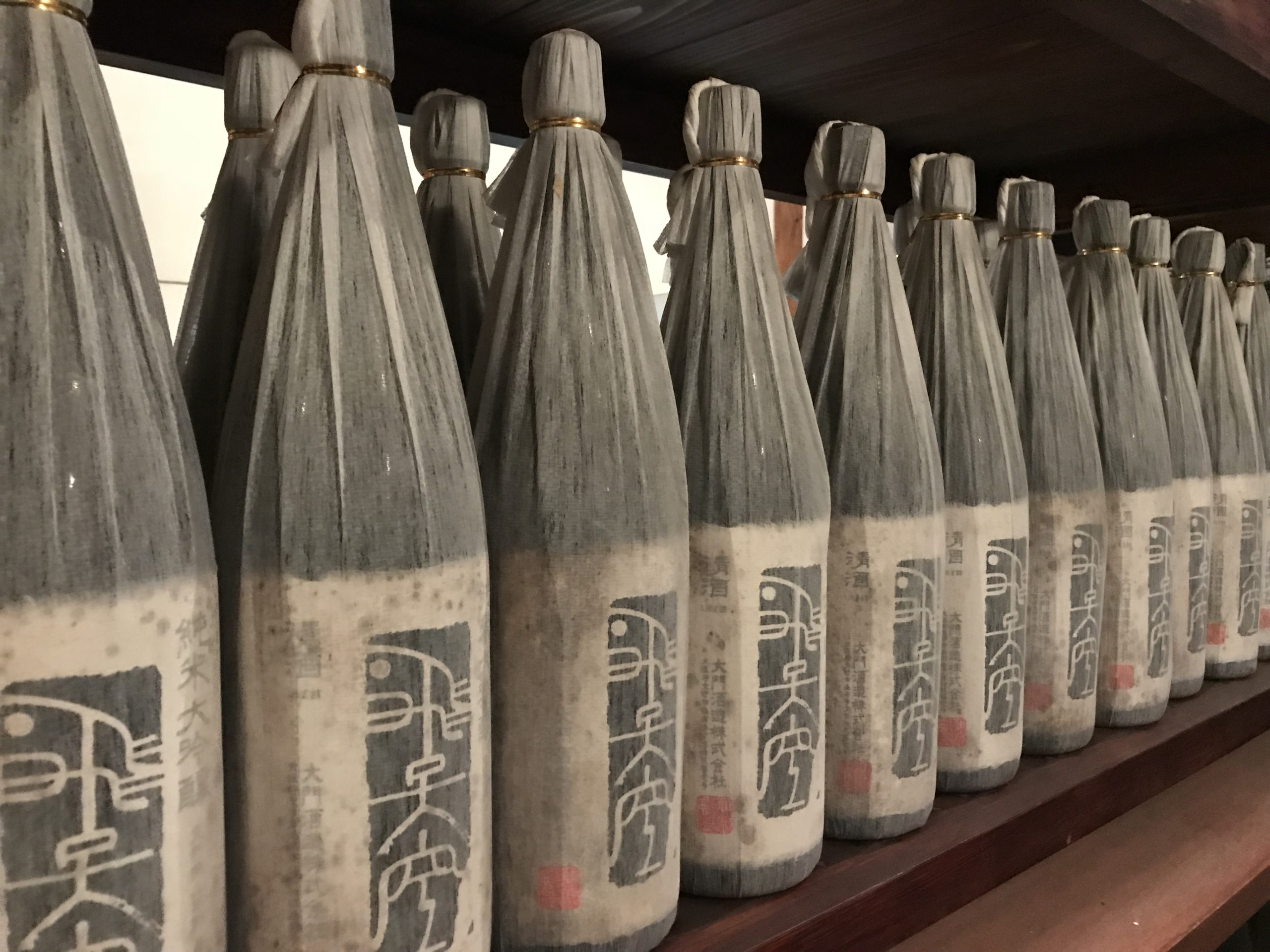
The longest history in Kansai Region
The Kansai region (関西地方, Kansai-chihō) or the Kinki region (近畿地方, Kinki-chihō), lies in the southern-central region of Japan’s main island Honshū.[4] The region includes the prefectures of Mie, Nara, Wakayama, Kyoto, Osaka, Hyōgo and Shiga, sometimes Fukui, Tokushima and Tottori. While the use of the terms “Kansai” and “Kinki” have changed over history, in most modern contexts the use of the two terms is interchangeable. The metropolitan region of Osaka, Kobe and Kyoto (Keihanshin region) is the second-most populated in Japan after the Greater Tokyo Area.
our sake
Only Premium Sake From Premium Rice
Ancient Capital with Great History and Nature
In 794, Kyoto (then known as Heian-kyō) was chosen as the new seat of Japan’s imperial court. The original city was arranged in accordance with traditional Chinese feng shui following the model of the ancient Chinese capital of Chang’an. The Imperial Palace faced south, resulting in Ukyō (the right sector of the capital) being on the west while Sakyō (the left sector) is on the east. The streets in the modern-day wards of Nakagyō, Shimogyō, and Kamigyō-ku still follow a grid pattern.
Purest Water in Kansai
Water is an inorganic, transparent, tasteless, odorless, and nearly colorless chemical substance, which is the main constituent of Earth’s hydrosphere and the fluids of all known living organisms (in which it acts as a solvent[1]). It is vital for all known forms of life, even though it provides no calories or organic nutrients. Its chemical formula is H2O, meaning that each of its molecules contains one oxygen and two hydrogen atoms, connected by covalent bonds.